| Author: Kamlesh Kumar | Published: 10-Oct-2022 |
In a world of high-velocity cloud adoption, businesses are often focused on availability zones, backup schedules, and global presence but one strategic design layer is often overlooked: Azure Paired Regions.
With over 60 regions worldwide, Microsoft Azure doesn’t just offer geographical coverage; it offers resilience engineering at scale. Paired regions are not just for failover they’re a deliberate mechanism for compliance, disaster recovery, and platform-level continuity.
Let’s explore what makes Azure Paired Regions a critical part of any cloud solution design and how to leverage them for better resilience, performance, and peace of mind.
What Are Azure Paired Regions?
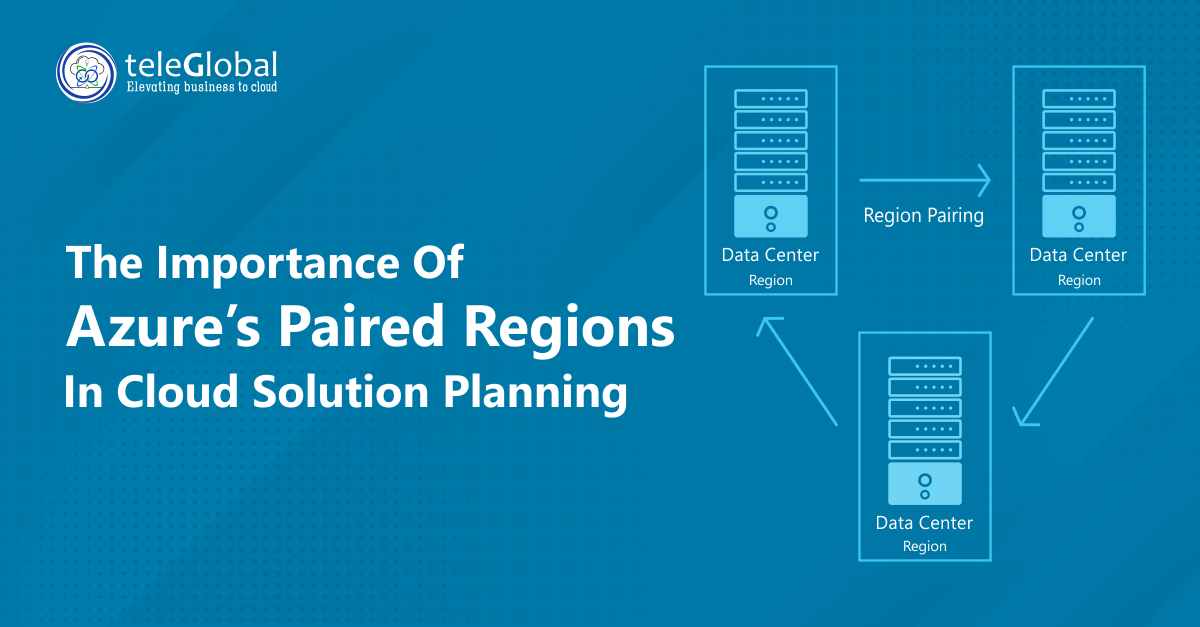
Microsoft sets up Azure Paired Regions, which are pairs of geographical regions that are purposefully paired for increased resilience. To achieve important economic and technological objectives, each Azure region is partnered with another within the same geographic area (with the exception of Brazil).
Here’s why that matters:
| Capability | What It Means |
| Safe deployment rings | Platform updates are rolled out sequentially if Region A goes down, Region B may still be stable. |
| Built-in cross-region replication | Services like Geo-Redundant Storage (GRS) automatically replicate between region pairs. |
| Priority failover orchestration | Microsoft prioritizes recovery of one region in each pair during outages. |
It limits how far failures can spread and gives teams more flexibility in managing both expected and unexpected maintenance
Key Architecture Patterns for Azure Paired Regions
Effective use of paired regions involves intelligent job distribution and goes beyond just checking a box.
Here’s how modern architectures are leveraging region pairs:
- Geo-redundant data storage (GRS) to replicate transactional data with minimal effort.
- Active-active compute deployments to maintain availability even when one region is affected.
- Development environments pinned to one region for cost efficiency, with recovery plans in the paired region.
- Network architecture designed to balance proximity (low latency) and separation (high resiliency).
Microsoft generally ensures ~300 miles of distance between paired regions close enough for performance, distant enough for safety.
Real-Life Examples
Here’s how companies use Azure Paired Regions effectively across different parts of the world:
- European Fintech
West Europe ↔ North Europe
Keeps data compliant with GDPR and ensures fast, reliable data replication between key financial hubs.
- U.S. Healthcare Platform
East US ↔ West US 2
Meets healthcare compliance standards like HIPAA and leverages geographic diversity to reduce risks from natural disasters.
- Asia-Pacific Media Company
Australia East ↔ Southeast Asia
Supports multi-region licensing and provides low-latency content delivery across major APAC markets.
- Asian E-commerce Leader
Southeast Asia ↔ East Asia
Manages customer data under strict regional data protection laws and ensures seamless shopping experience with fast failover capabilities.
- Pan-Asian Manufacturing Firm
Central Asia ↔ South Asia
Balances regulatory compliance across borders and maintains continuous operational uptime through paired region disaster recovery.
In each case, selecting the right Azure paired regions supports not only service availability but also meets local regulatory needs and enhances user experience across multiple markets.
Region Pair Selection Checklist
Selecting the right paired region isn’t just about proximity it’s about aligning technical and business needs:
| Factor | Why It Matters | Quick Test |
| Regulatory boundaries | Avoid data crossing sensitive borders | Can we certify compliance at rest? |
| Recovery objectives (RPO/RTO) | Impacts backup strategy and DR | Can we replicate fast enough? |
| Cost sensitivity | Some metros are more expensive | Compare storage/egress pricing |
| Service availability | Not all services are in every region | Check Azure Region Matrix |
| Growth planning | You may scale beyond current regions | Will this pair support future demand? |
Common Missteps to Avoid
Many businesses approach paired regions with assumptions that lead to risk and cost:
- Assuming DNS failover is enough
Failover needs infrastructure automation, not just routing.
- Confusing Availability Zones with Region Pairs
Zones are for intra-region redundancy. Pairs are for regional outages.
- Overlooking bandwidth constraints
Cross-region replication is only valuable if your network and storage can handle the load.
How Teleglobal Helps
With deep experience in regulated, high-uptime environments, Teleglobal works with organizations to:
- Design workload distribution based on business-criticality and compliance
- Simulate region failures and validate DR strategies
- Optimize paired region configurations for cost, latency, and resilience
- Support you as Azure’s regional services evolve and expand
We don’t just architect for today. We future proof for tomorrow.
Conclusion
Paired regions are more than a failover option they are the backbone of business continuity in the cloud. When used intentionally, they offer a clear path to smarter recovery planning, regulatory alignment, and stronger customer trust.
The enterprises that embrace this design capability don’t just reduce downtime. They gain operational confidence.
Get your free Azure Resilience Assessment today and ensure your cloud architecture is built for what’s next.
Frequently Asked Questions
1. What is an Azure Paired Region?
An Azure Paired Region is a pair of Azure data center regions within the same geography, designed by Microsoft to provide resilience, disaster recovery, and data redundancy during outages or planned maintenance.
2. Why are Azure Paired Regions important?
They help protect your apps and data during outages, support cross-region replication, and meet compliance needs.
3. What is the difference between Azure Availability Zones and Azure Paired Regions?
Azure Availability Zones are multiple, isolated locations within a single Azure region that provide high availability in case one data center goes down.
Azure Paired Regions, however, are two geographically separate regions linked by Microsoft to support disaster recovery, data replication, and regional fault tolerance.
4. Which services support Azure Paired Regions for replication?
Services like Azure Storage (with Geo-Redundant Storage – GRS), Azure SQL Database, and Azure Site Recovery use paired regions for cross-region replication and disaster recovery capabilities.
5. How does Azure keep services running if one region fails?
Azure uses paired regions with physical separation, automatic replication, and prioritized recovery processes to ensure resilience and continuity during outages.