| Author: Abhinita Singh | Published: 09-Feb-2026 |
Cloud managed services are now essential to modern cybersecurity because cloud environments are harder to secure than ever before. As organizations move more systems and data to the cloud, they gain speed and flexibility, but they also face more security risks.
This article explains what cloud managed services are, how they support cybersecurity, and why managed cloud solutions are important for reducing risk, improving visibility, and keeping cloud environments secure.
What Is Cloud Managed Services?
Cloud managed services involve a dedicated team that manages and monitors cloud environments on an ongoing basis. This includes applying updates, checking configurations, and ensuring security controls remain in place.
These services support cloud infrastructure, applications, and security settings with one clear goal: keep systems stable, secure, and running smoothly over time.
By making security part of daily cloud work, cloud managed services help organizations stay in control of systems that would otherwise be difficult to manage internally.
Why Cybersecurity Risks Increase in Cloud Environments
Cloud platforms come with built-in security, but problems still happen. Most cloud security incidents are not caused by flaws in the cloud itself. They happen because something was set up incorrectly or not monitored closely enough.
Common cloud cybersecurity risks include:
- Misconfigured storage, networks, and permissions
- Weak identity and access management
- Limited visibility into what is happening in the cloud
- Different security rules across environments
- Delayed patching and updates
These risks grow as organizations use multiple cloud platforms or mix cloud and on-premise systems. Without centralized oversight and continuous monitoring, small mistakes can turn into serious security issues.
What Is Managed Services in Cloud Security?
Managed services in cloud security involve handing over daily cloud and security tasks to teams that specialize in cloud platforms and cybersecurity frameworks. This helps ensure security controls are applied correctly and checked regularly.
A cloud managed service usually includes:
- Managing security configurations
- Monitoring identity and access
- Detecting suspicious activity
- Applying patches and updates
- Coordinating incident response
By handling these tasks centrally, organizations reduce mistakes, respond faster to threats, and avoid overloading internal teams.
How Cloud Management Services Strengthen Cybersecurity
Cloud management services help strengthen cybersecurity by keeping security rules consistent and making cloud activity easier to track. As cloud environments grow, manual checks become unreliable.
Cloud management services help organizations:
- Spot misconfigurations early
- Apply the same security rules everywhere
- Monitor who is accessing systems and data
- Detect unusual behavior quickly
- Keep records needed for audits and compliance
This approach helps prevent problems instead of reacting after something goes wrong.
Key Benefits of Cloud Managed Services for Cybersecurity
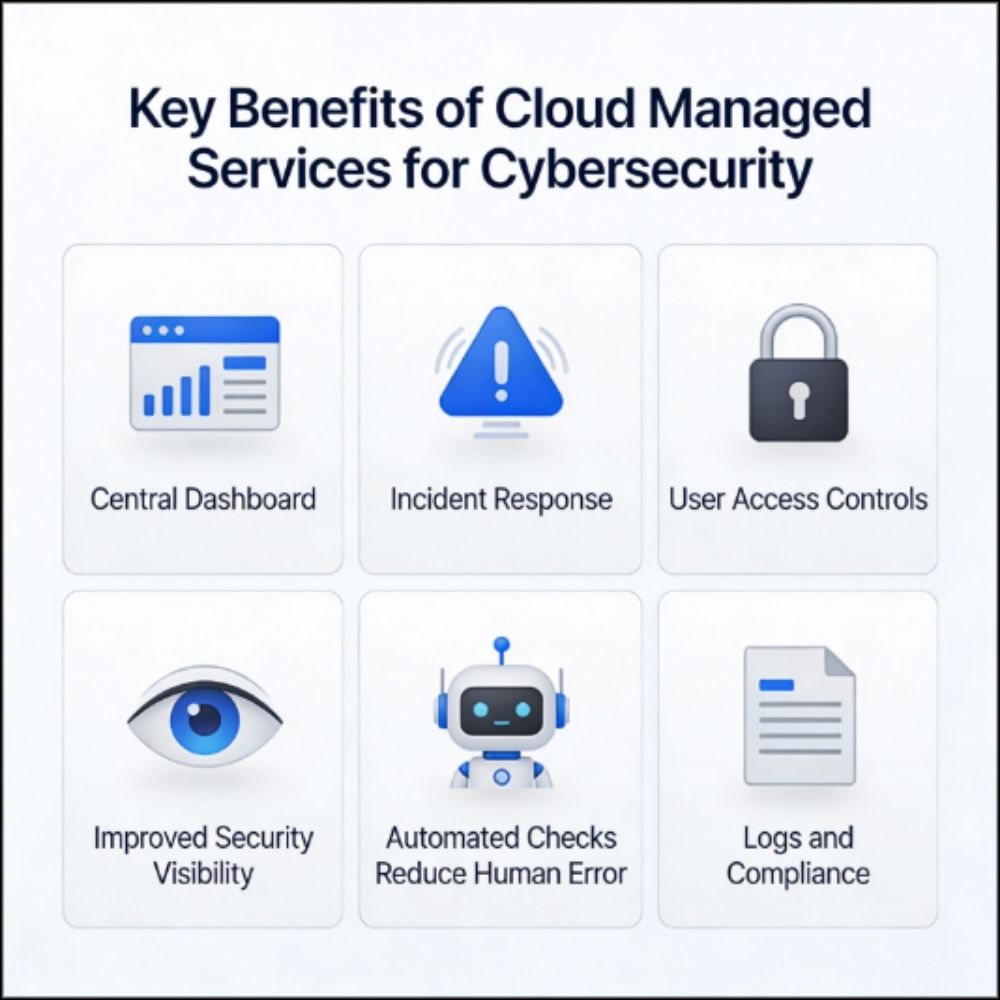
The benefits of cloud managed services are especially clear when it comes to security.
- Better Security Visibility: Managed services provide ongoing insight into cloud activity, making it easier to notice threats early.
- Faster Response to Incidents: Clear response steps and alerts help teams act quickly when something suspicious happens.
- Stronger Identity and Access Control: Managed cloud solutions help limit access to only what users need and track identity misuse, which is a common cause of cloud breaches.
- Lower Risk from Human Error: Standard security practices reduce gaps that often appear when settings are managed manually.
- Support for Compliance and Governance: Cloud managed services help organizations meet security and compliance requirements by keeping logs, reports, and controls up to date.
Is Your Cloud One Misconfiguration Away from a Breach?
95% of cloud security failures are the customer’s fault. Don’t let a manual error compromise your data. We provides 24/7 managed oversight to lock down your environment and eliminate blind spots before attackers find them.
Managed Cloud Solutions and the Shared Responsibility Model
Cloud security follows a shared responsibility model. Cloud providers protect the infrastructure, but organizations are responsible for their data, applications, and access controls.
Managed cloud solutions help by:
- Turning cloud security tools into clear actions
- Monitoring settings across accounts and regions
- Making it clear who is responsible for each task
This helps close security gaps that attackers often look for.
Why Organizations Rely on Cloud Managed Services for Cybersecurity
Cyber threats change quickly, and fixed security setups no longer work. Cloud managed services provide ongoing support, automation, and consistency needed to protect cloud environments at scale.
Organizations using managed cloud solutions benefit from:
- Clearer visibility into security risks
- Faster detection and response
- Less pressure on internal teams
- Better coordination between IT and security
Teams at Teleglobal work with organizations facing these challenges by supporting secure cloud operations that prioritize visibility, consistency, and long term risk reduction.
Conclusion
As cloud use continues to grow, cybersecurity becomes harder to manage without help. Cloud managed services are now essential to modern cybersecurity because they provide continuous protection, reduce risk, and support consistent security practices.
By using cloud management services and managed cloud solutions, organizations can move away from reactive security and build a stronger, security first cloud approach that supports long term growth.
Frequently Asked Questions
1. What is cloud managed services in cybersecurity?
It involves ongoing monitoring and management of cloud environments to reduce risk and improve security visibility.
2. How do cloud managed services improve cybersecurity?
They help detect threats earlier, apply consistent security rules, and respond faster to incidents.
3. Are cloud managed services useful for small and mid-sized businesses?
Yes. They provide access to security skills and tools that smaller teams may not have internally.
4. What risks do cloud managed services help reduce?
They help reduce risks from misconfigurations, unauthorized access, delayed updates, and limited monitoring.