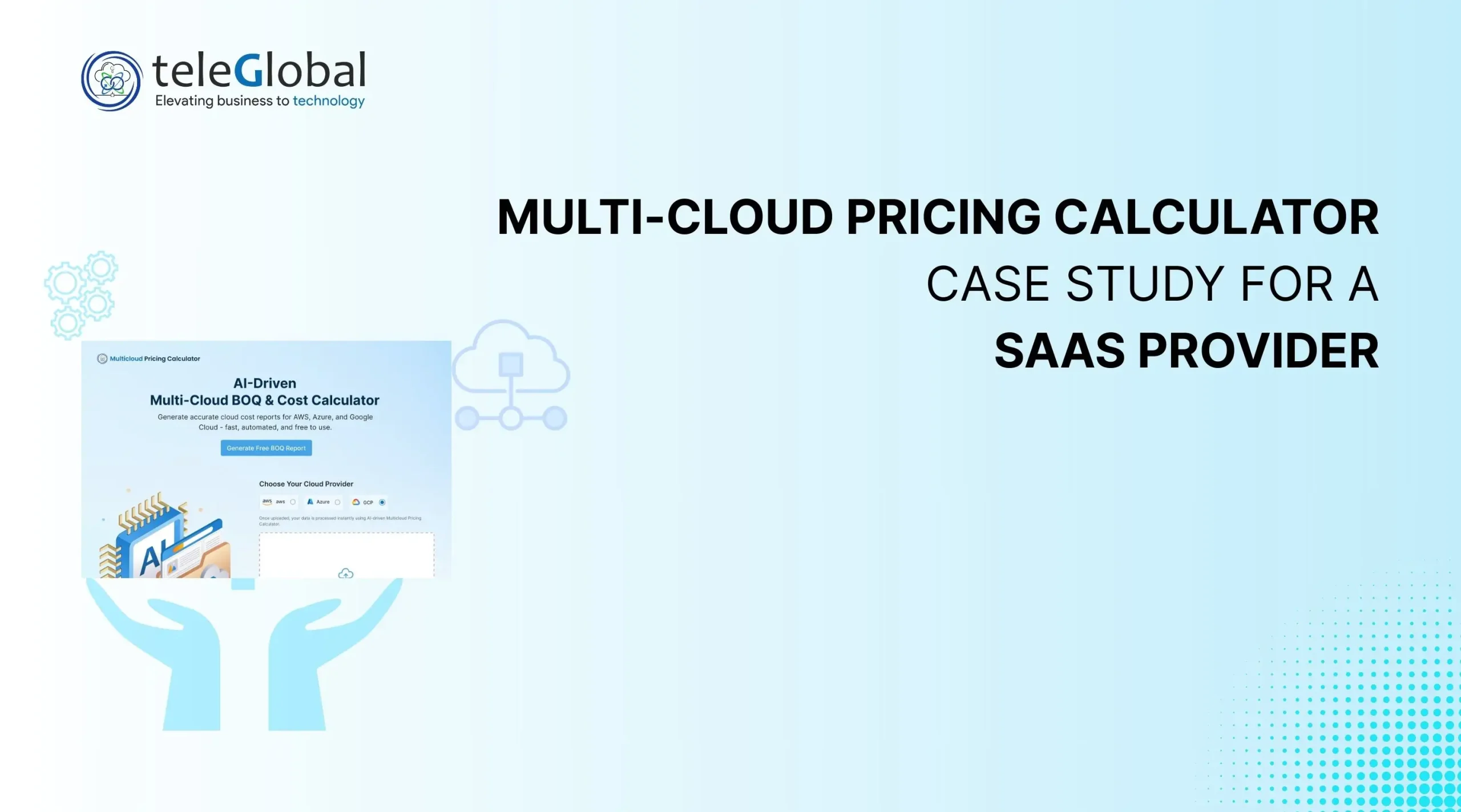
For SaaS providers operating across AWS, Azure, and Google Cloud, estimating infrastructure costs early is critical for pricing, margins, and scale. This case study explains how a SaaS company improved cost visibility and planning accuracy using a multi-cloud pricing calculator, replacing fragmented tools and manual estimation workflows.
SaaS Provider Cloud Cost Challenges
SaaS businesses rely heavily on cloud infrastructure to deliver scalable, always-available services. As products grow and customer usage increases, cloud costs directly impact profitability and pricing strategy.
Operating across multiple cloud platforms adds flexibility, but it also introduces complexity. Different pricing models, regions, and usage patterns make cost estimation harder to manage using traditional methods.
Client Background
The client is a B2B SaaS provider delivering a subscription-based platform to customers across multiple regions. To meet performance, availability, and compliance needs, the company runs workloads across AWS, Microsoft Azure, and Google Cloud.
As the platform scaled, leadership needed a clearer way to estimate infrastructure costs during:
- New feature launches
- Enterprise customer onboarding
- Regional expansion planning
Accurate cost estimates were essential for maintaining margins and forecasting growth.
Challenges with Cloud Cost Estimation
Fragmented Cost Calculation Tools
The SaaS team relied on spreadsheets and individual tools such as a cloud cost calculator, aws cost calculator, azure cost calculator, and google cloud pricing calculator. While each tool worked independently, combining results across platforms was time-consuming and inconsistent.
Inconsistent Pricing Assumptions
Different teams used different assumptions when running tools like the aws pricing calculator and azure pricing calculator. This led to mismatched estimates during internal reviews and delayed decision-making.
Limited Multi-Cloud Visibility
The lack of a unified view made it difficult to:
- Compare costs across AWS, Azure, and Google Cloud
- Understand the impact of region or scale changes
- Confidently forecast infrastructure spend
Solution: Multi-Cloud Pricing Calculator Implementation
To address these challenges, the SaaS provider adopted an AI-driven multi-cloud pricing calculator designed to estimate and compare cloud costs across platforms.
Key Capabilities
- Upload infrastructure inventory in Excel or CSV format
- Automatically validate and organize resource data
- Generate comparable cost reports across AWS, Azure, and Google Cloud
- Use live pricing data to keep estimates current
At Teleglobal, we built this multi-cloud pricing calculator after working with SaaS teams that struggled to manage cloud cost estimation across multiple providers.
Implementation Approach
The SaaS provider integrated the calculator into its regular planning workflow:
- Infrastructure details were captured during feature and capacity planning
- Inventory files were uploaded for cost validation
- Cost reports were generated for different cloud and region scenarios
- Outputs were shared across engineering, finance, and product teams
This created a consistent and repeatable process for cost estimation.
Results and Business Impact
After implementation, the SaaS provider experienced these improvements:
- Faster cloud cost estimation during planning cycles
- Improved visibility into cost differences across cloud platforms
- More reliable margin forecasting as customer usage scaled
- Reduced rework caused by outdated spreadsheets
- Better alignment between engineering, finance, and leadership teams
Cost planning shifted from a reactive task to a proactive part of product and pricing strategy.
Conclusion
For SaaS providers operating in multi-cloud environments, accurate cost estimation is essential for sustainable growth. This case study demonstrates how adopting a unified cloud cost calculator approach helped a SaaS business improve visibility, reduce manual effort, and make better-informed decisions across AWS, Azure, and Google Cloud.
By using a multi-cloud pricing model supported by automation, SaaS teams can plan with greater confidence while keeping cost management simple and scalable.